Lines in motion.
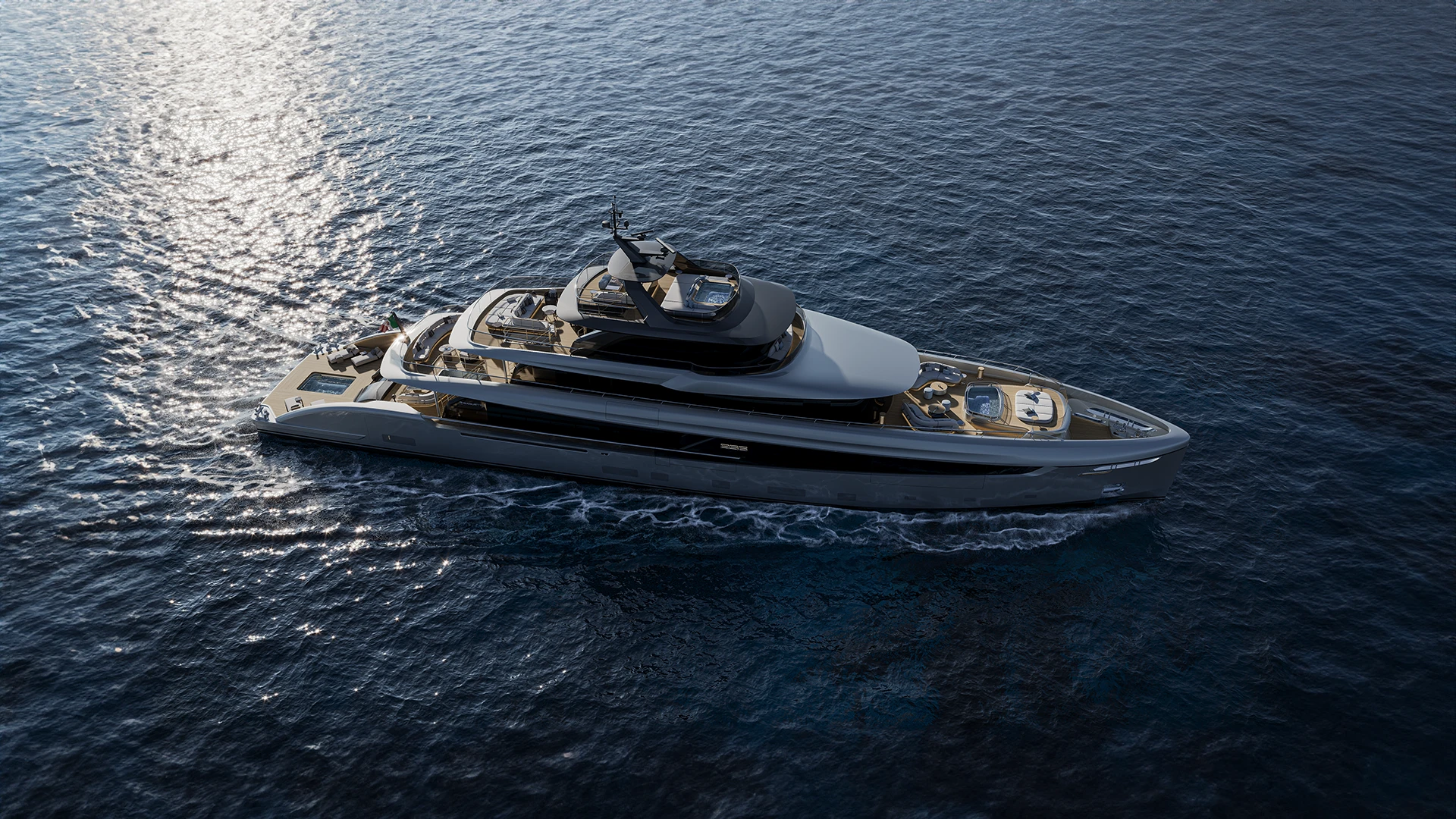
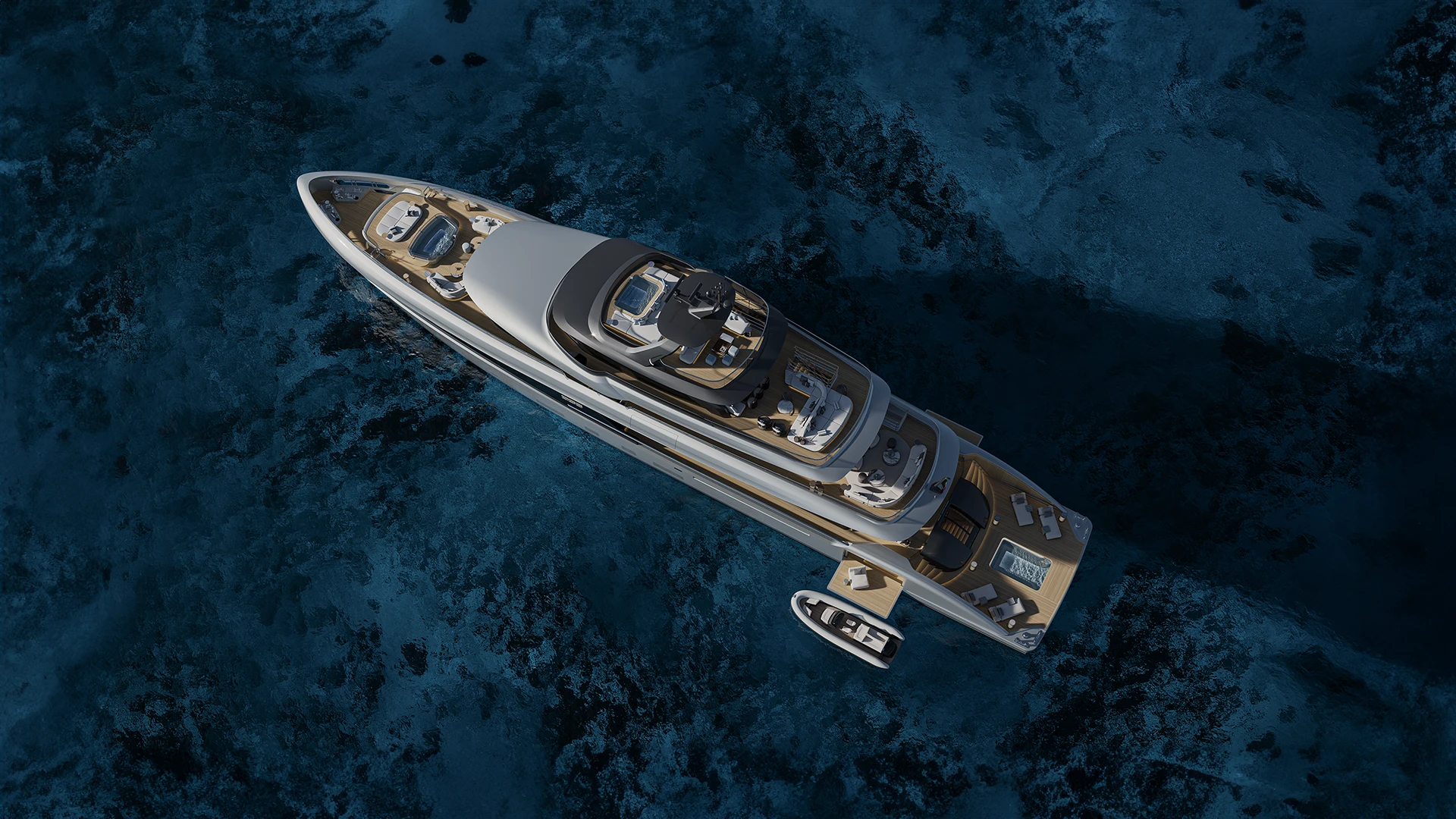
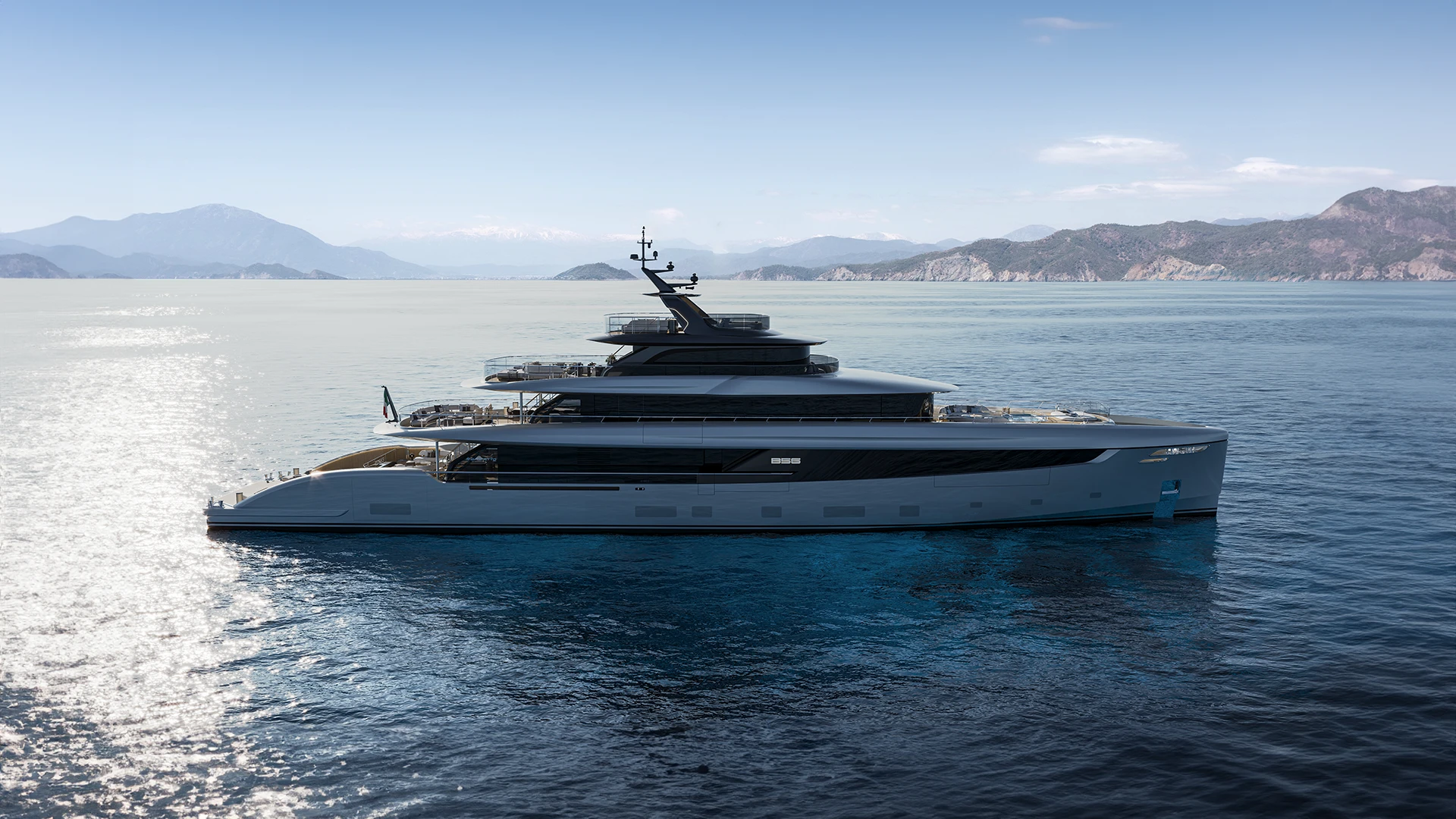
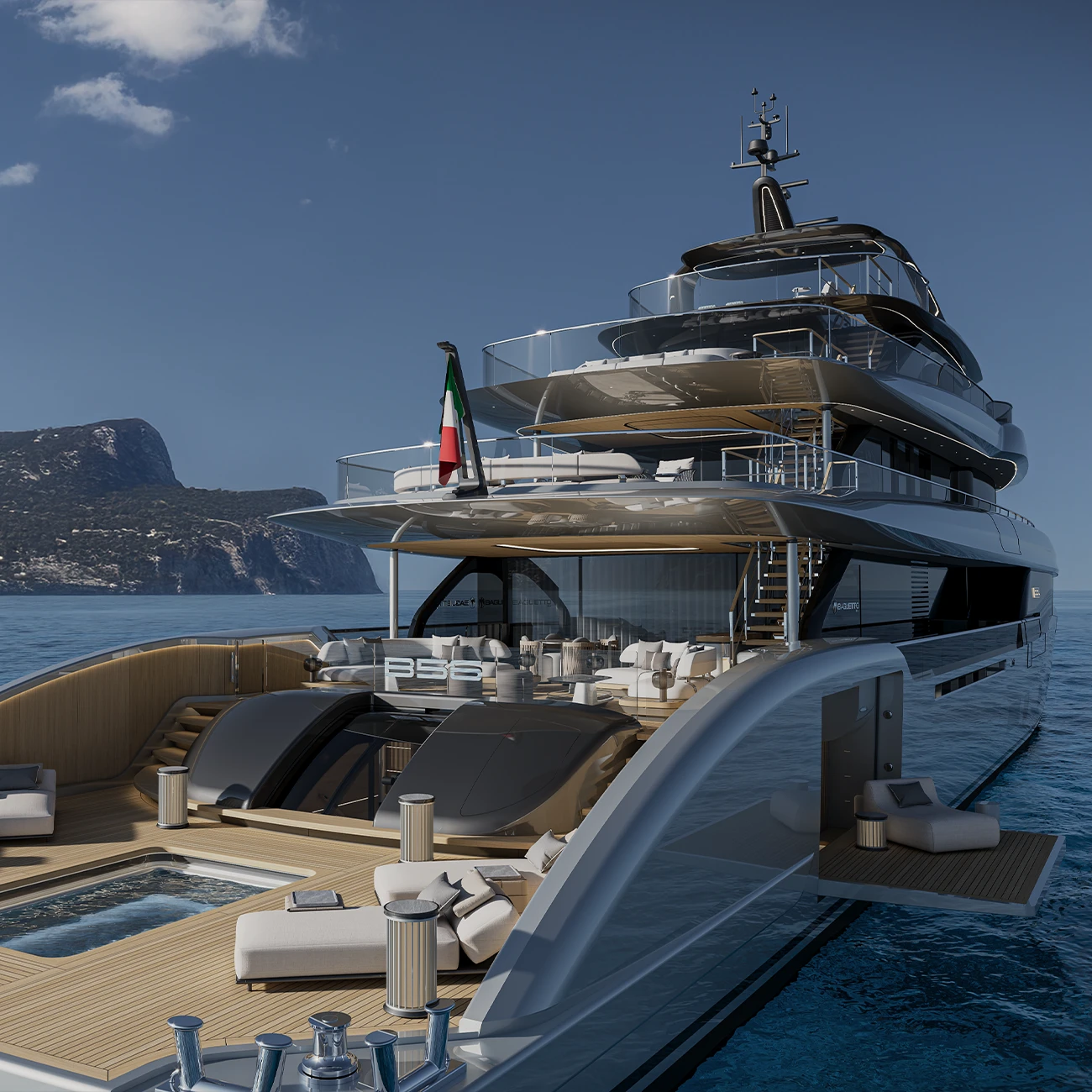
A 58-metre displacement yacht featuring an elegant and dynamic design by Team for Design – Enrico Gobbi. Streamlined lines, expansive glazing, and aeronautics-inspired details create a constant sense of motion. She offers generous spaces, including a private forward deck for the owner and an aft infinity pool, while maintaining a perfect balance between impressive volumes and timeless refinement.
DIRECT ACCESS TO THE BEACH CLUB
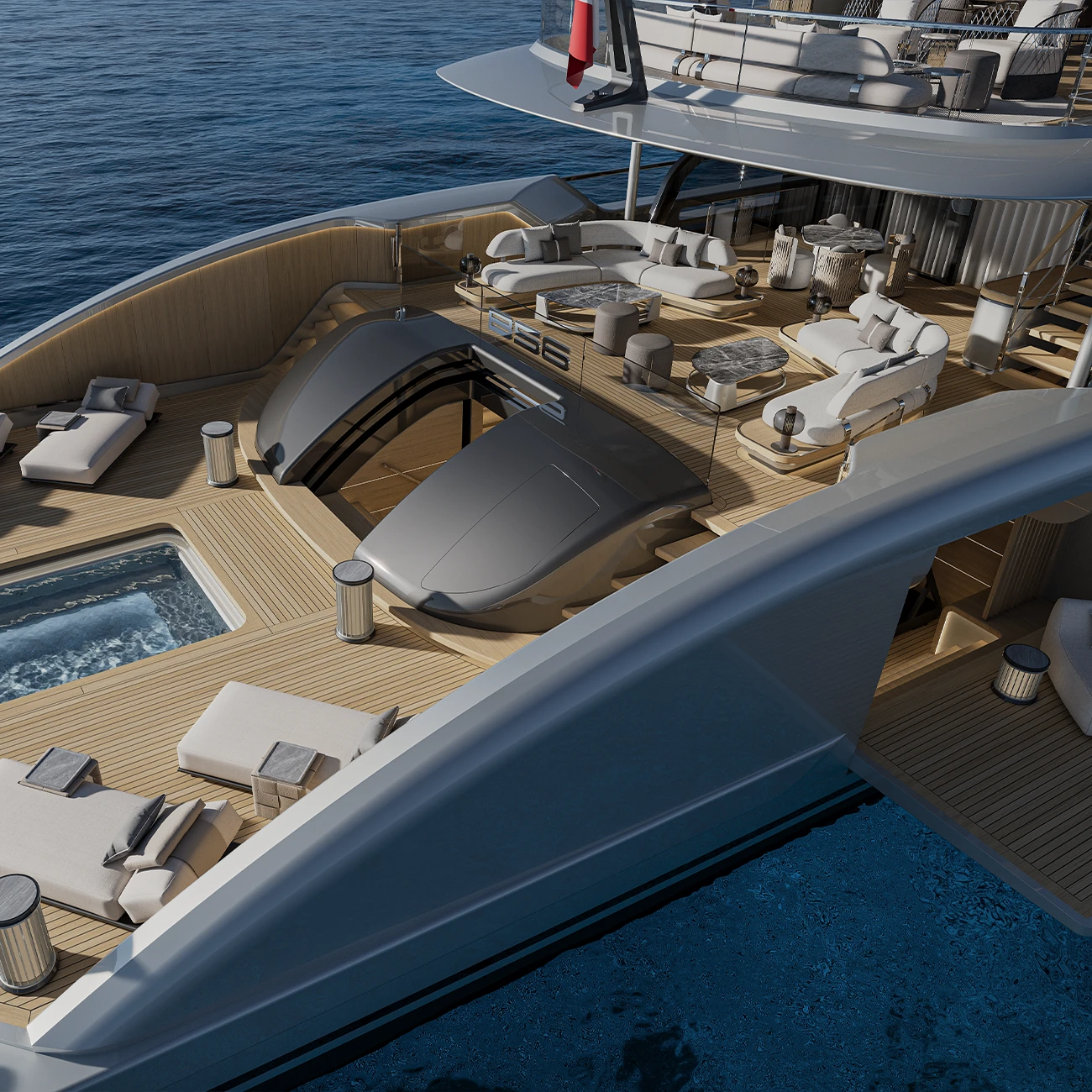
The aft beach area, featuring an integrated pool and fold-down side balconies, is connected to the beach club via two sliding doors.
PRIVATE LOUNGE
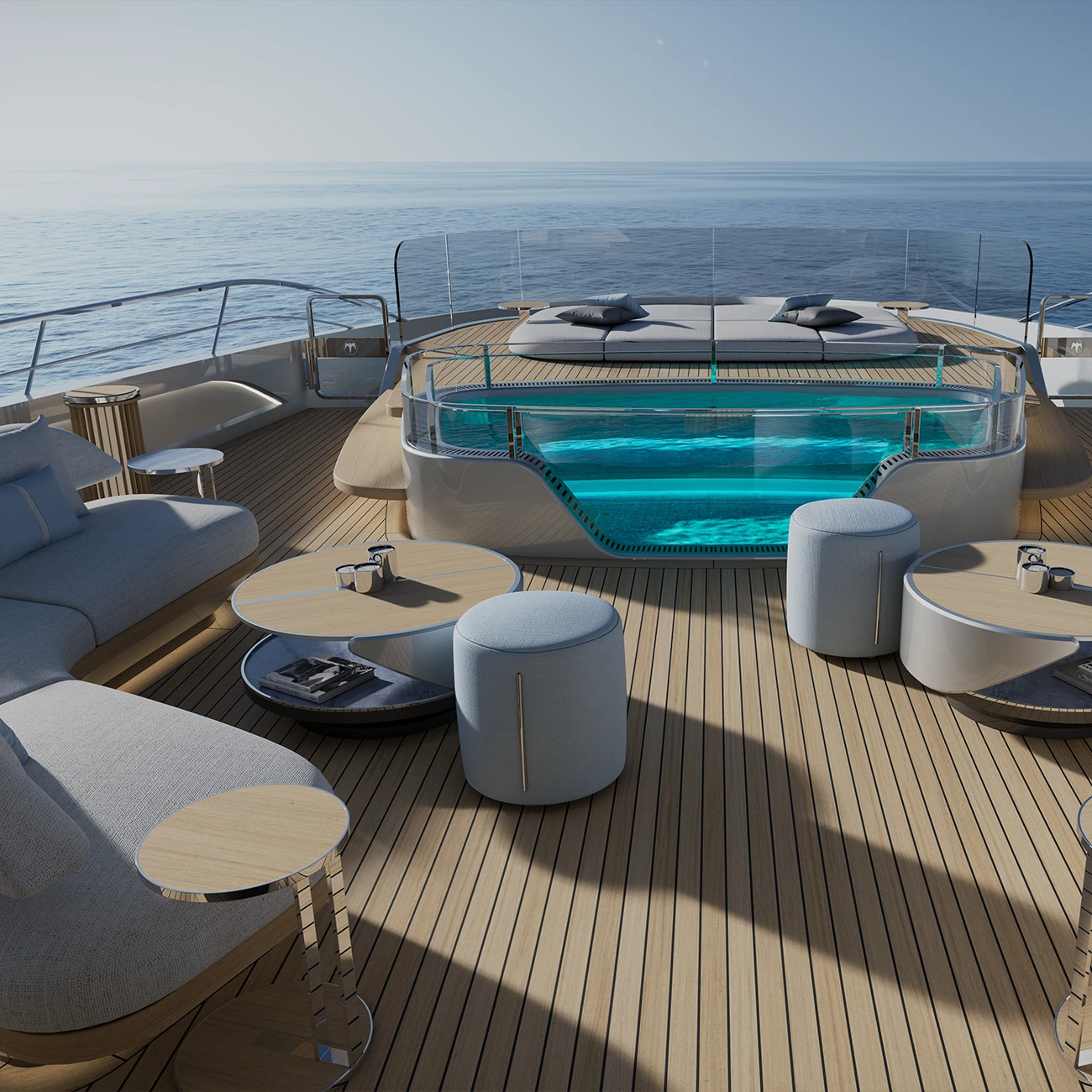
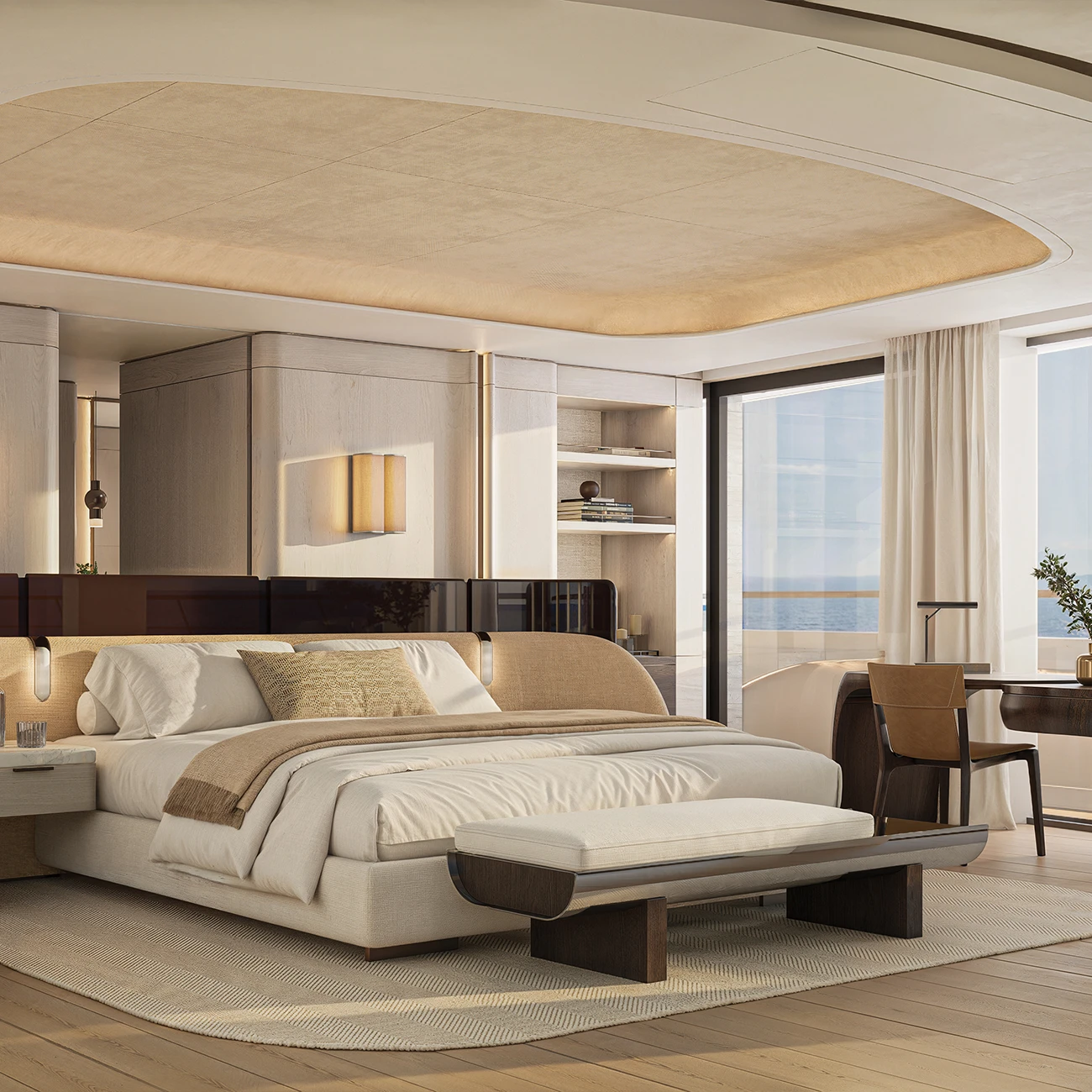
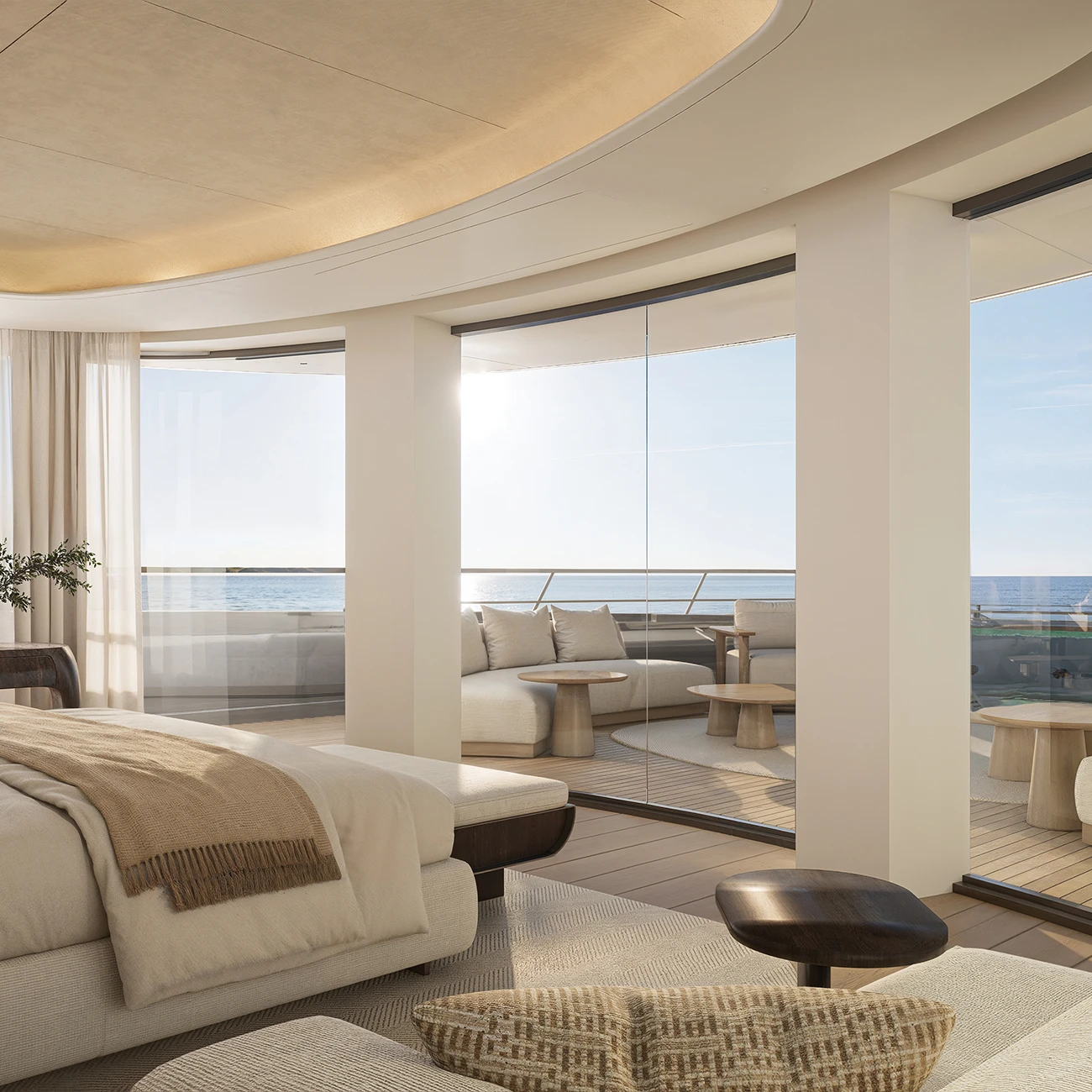
Forward of the master cabin on the main deck, a private lounge area opens up with a pool and sunbathing space: an elegant terrace that serves as a natural outdoor extension of the owner’s suite, offering privacy, comfort and panoramic sea views.
VESTA58 – MEYER DAVIS
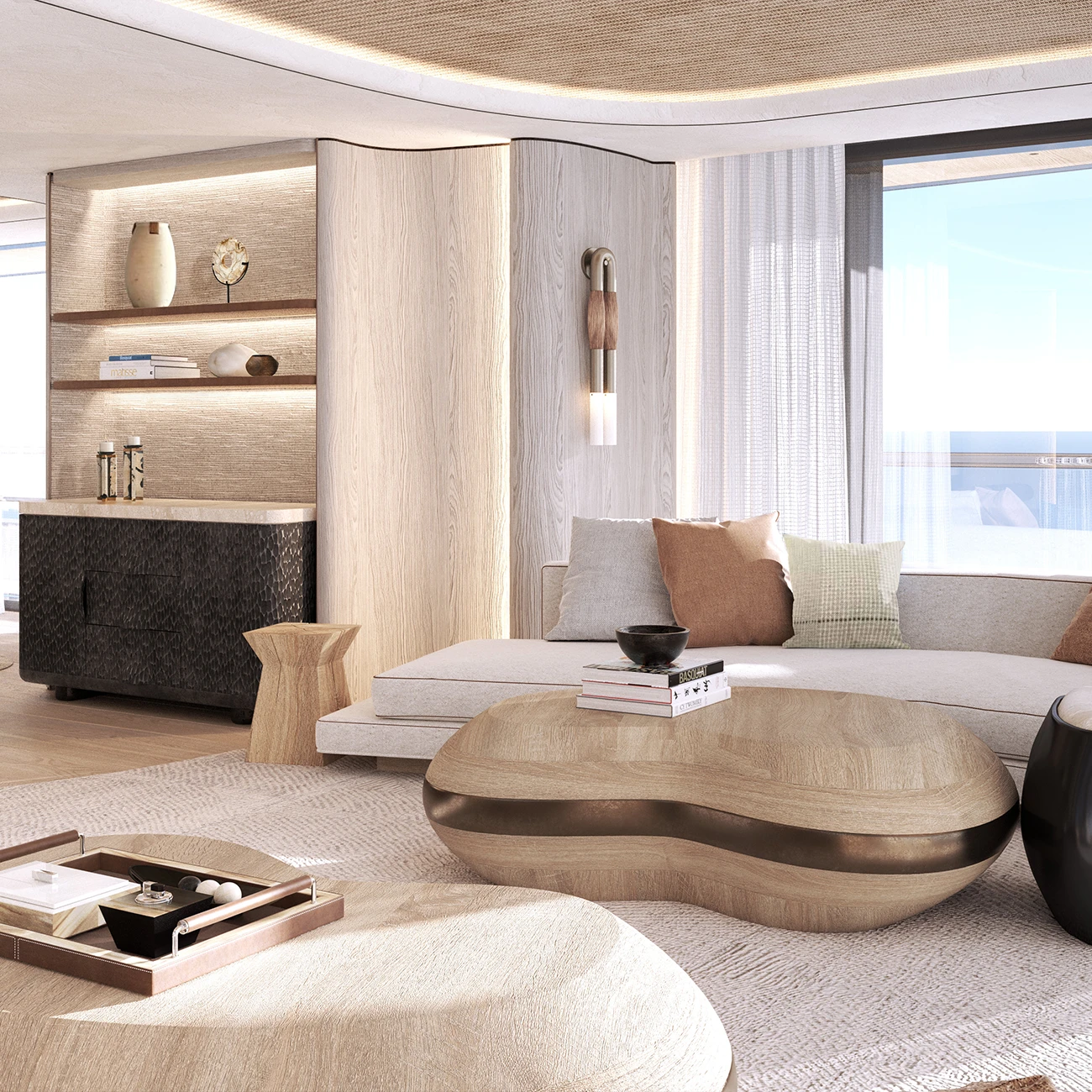
The interior decor proposal developed in partnership with Meyer Davis, reimagines seafaring as a deeply personal journey. Rooted in the spirit of Vesta — the Roman goddess of home — the interiors express warmth, clarity, and quiet strength.
TECHNICAL SPECIFICATIONS
Hull Material
Steel
Superstructure Material
Aluminum
Length Overall
57.3 m // 188 ft
Beam Overall
10.5 m // 34 ft
Gross Tonnage
860
Engines
2 x CAT 3512E
Maximum Speed
16.5 Kn
Cruising Speed
14 kn
Max. Power
2 × 1,650 kW (2,200 HP) at 1,6
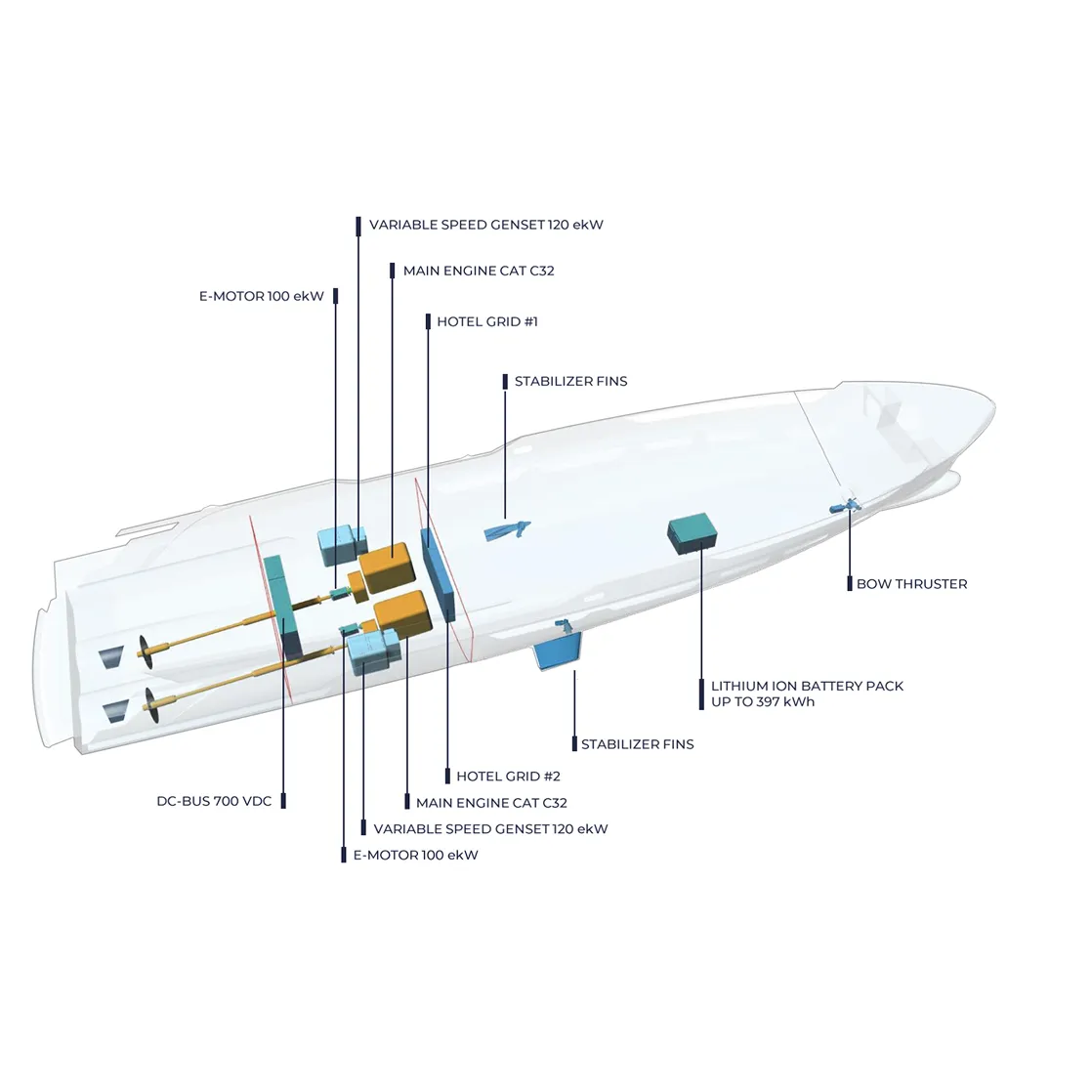
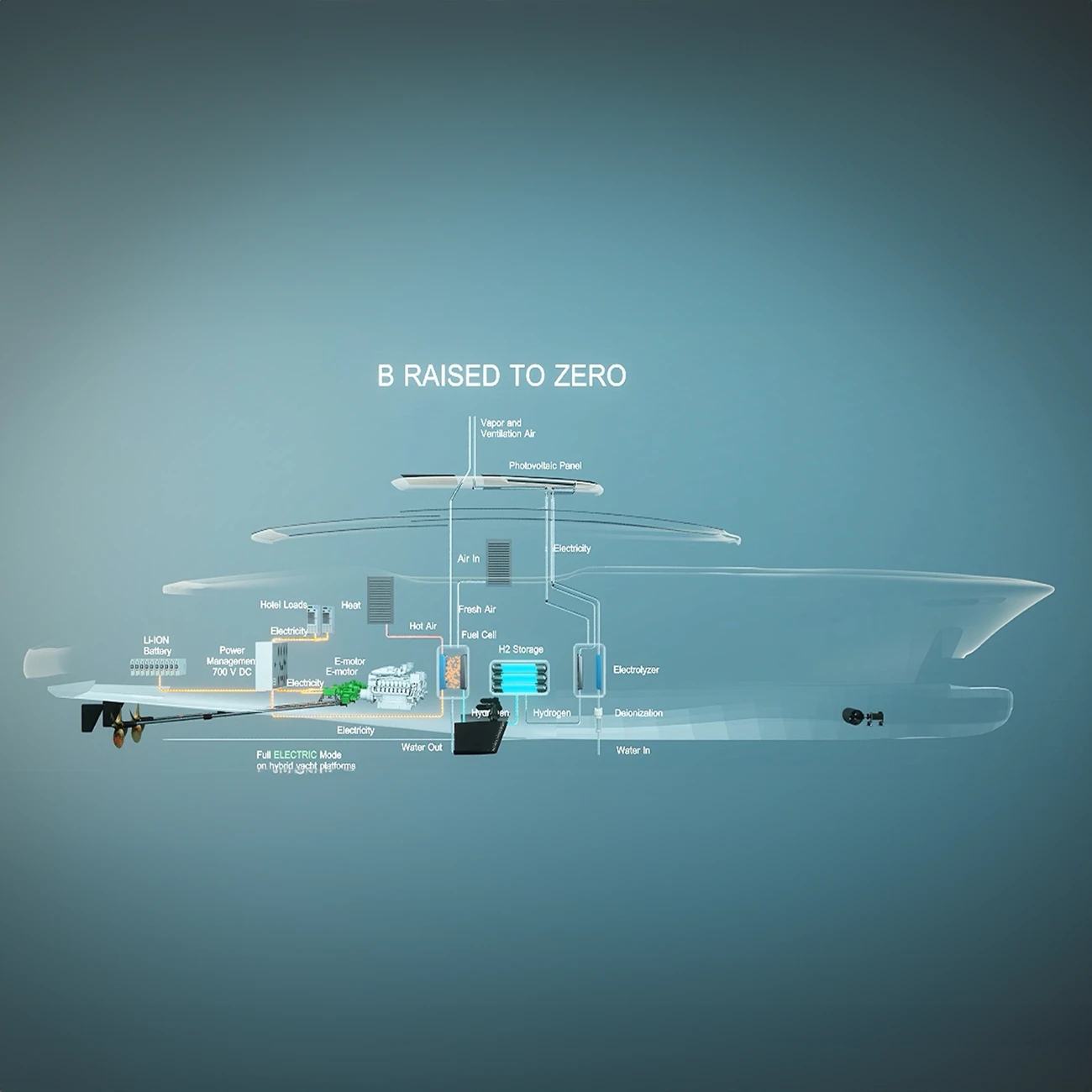
The nautical platform is optimized for an optional advanced hybrid propulsion system, integrating diesel engines, lithium batteries, variable-speed generators, and electric motors to ensure efficient, quiet, and sustainable performance.
Key benefits:
- Reduced fuel consumption and emissions
- Silent electric navigation at low speeds
- Enhanced onboard comfort and improved energy efficiency
A Step Forward Toward Zero Emissions
Alongside the advanced hybrid propulsion system, an optional onboard hydrogen production unit further elevates the yacht’s sustainable performance. By harnessing renewable resources such as seawater and solar energy, the system generates and stores hydrogen directly on board to support both propulsion and hotel operations.
The key advantage lies in its operational autonomy during cruising: hydrogen is produced on board, reducing the need for dedicated refuelling infrastructure. This integrated approach significantly lowers diesel consumption, extends overall range, and enhances energy efficiency—delivering a quieter, cleaner, and more independent yachting experience.